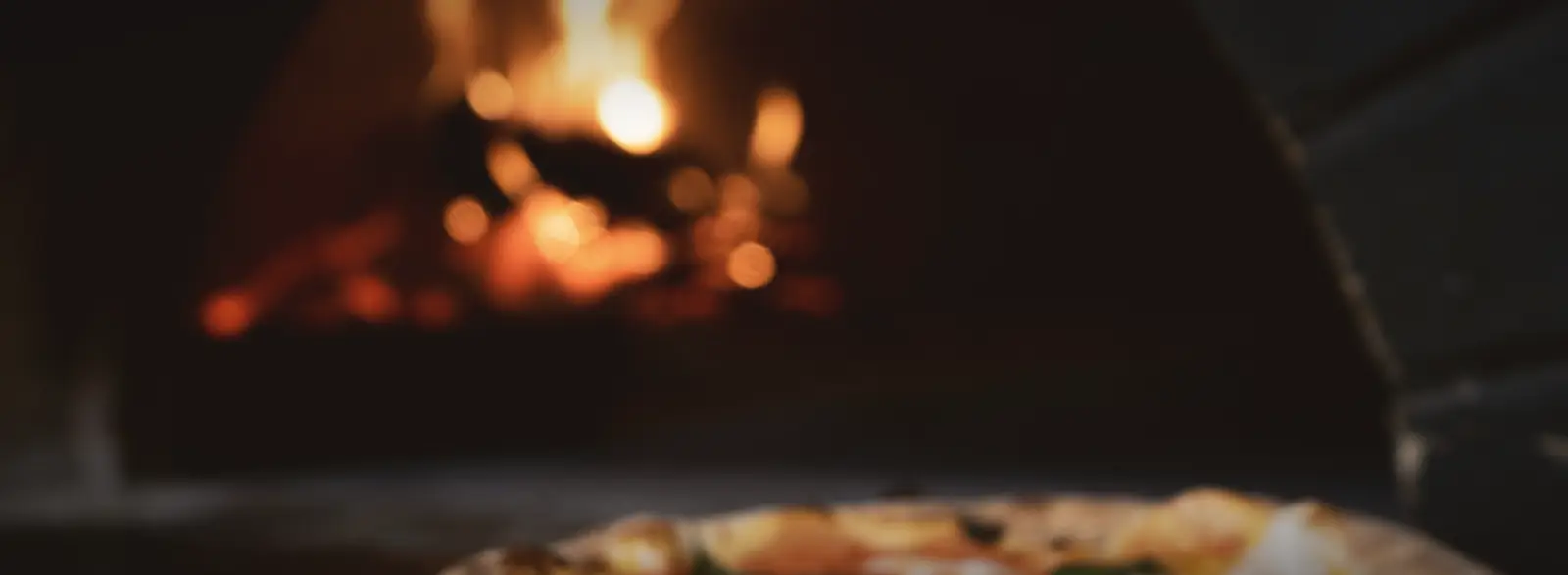
Our fire
One fire. Everything through it.
Cinder House started with a simple rule: if it’s on the plate, it has spent time near the flame. That rule decided the kitchen, the menu, and even how the room is lit.
Why wood
A fire you have to read.
A gas flame does the same thing every time you turn the knob. A wood fire doesn’t. It runs hotter at the back than the front, it shifts as the logs burn down, and it changes with the weather. Our cooks learn to read it the way a sailor reads wind.
That unevenness is the point. It gives you a crust that’s blistered in one place and soft in another, greens that are charred at the tips and bright at the stem, and a faint smoke that gets into butter, broth and even the dough.
There are no gas burners in our kitchen. There is one brick oven, one grate over a bed of coals, and a steady supply of oak and almond wood.
A day in the fire
Lit at two. Still warm at dawn.
Lighting
Oak goes in first for a long, even heat. It takes about two hours for the dome to soak up enough of it to hold a steady 850° on the floor.
First heat
The focaccia bakes while the oven is still climbing. Peppers and onions go straight into the coals to blacken for tonight’s sauces.
Service
Almond wood takes over. It burns hotter and cleaner, which is what the pizza and the grate need. We feed the fire every twenty minutes or so.
Embers
After the last pizza, the oven is left to cool with its door half closed. Tomorrow’s short rib ragù goes in overnight and cooks slowly in whatever heat is left.
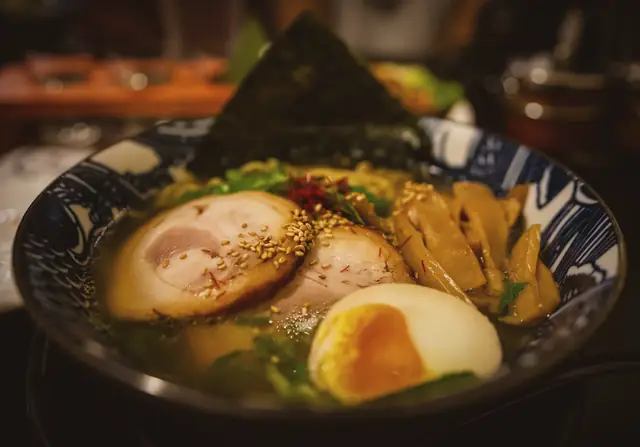
Italian & Japanese
Two kitchens that already agree.
Italian and Japanese cooking start from the same place: very few ingredients, picked at the right moment, treated carefully. Both love fermentation. Parmigiano and miso, prosciutto and katsuobushi, aged vinegar and aged shoyu all do the same work of adding depth that tastes like time.
So we don’t think of our menu as fusion. We think of it as one conversation. A carbonara made with mentaiko. A brodo built on kombu. Wagyu on a pizza, finished with shiso. Every one of those plates goes through the same fire.
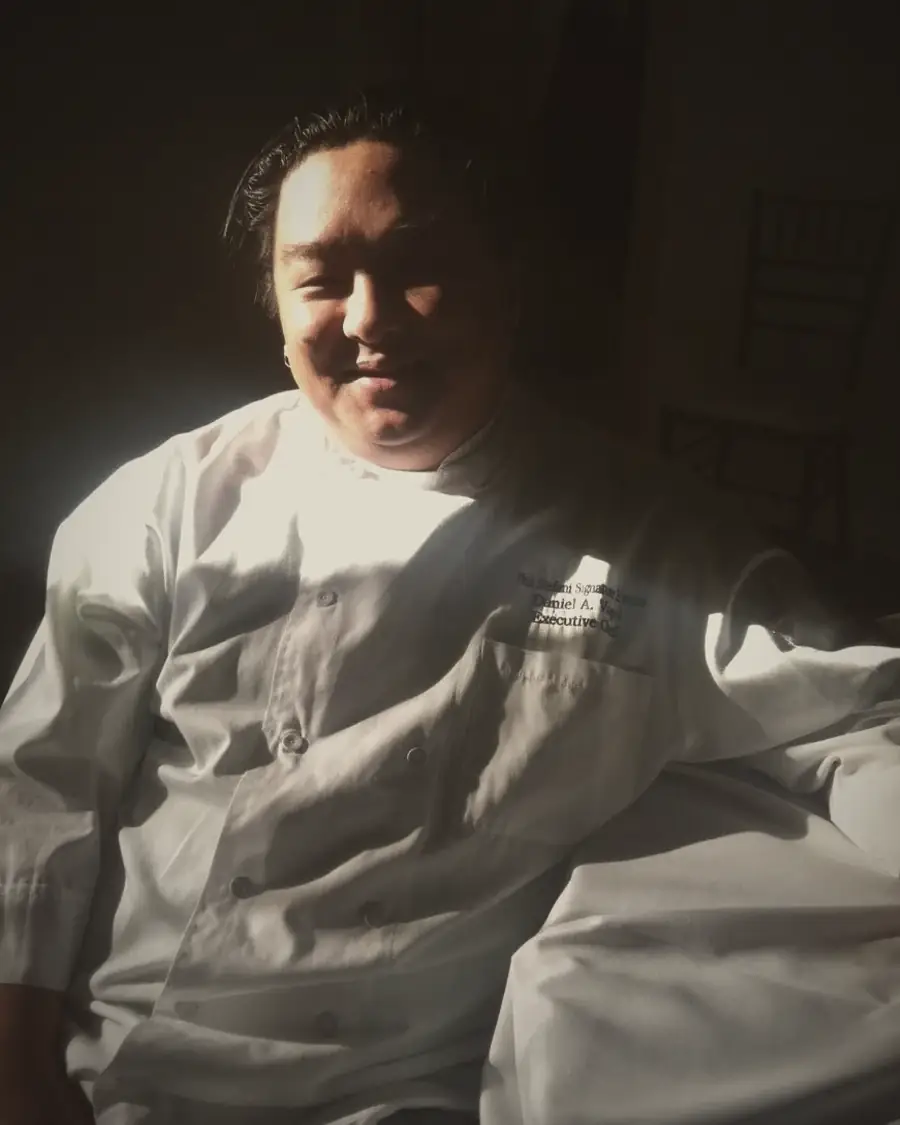
At the fire
Daniel Vogel
Daniel grew up in Iowa, where he learned to cook the way farm families always have: with whatever was growing nearby. By twelve he was making pasta after school on a pasta maker of his own.
He was considering medical school until his dad showed him a culinary school pamphlet. He changed course, put himself through culinary school, and built his cooking on classical French training.
Along the way he trained with chefs who taught him to look at food on a global scale:
- Roland Henin, Certified Master Chef
- Wolfgang Puck
- Hubert Keller
- Michael Mina
- Jim Anile
He has cooked for Phil Stefani Signature Restaurants and for Blue Plate Catering, where putting out 600 servings at an off-site event became routine.
“Before it was cool to do farm-to-table, we were doing farm-to-table just to get by.”
Daniel Vogel
“That whole farm-to-table philosophy is very near and dear to my heart… I think it’s just a really nice way to reconnect with food.”
Daniel Vogel
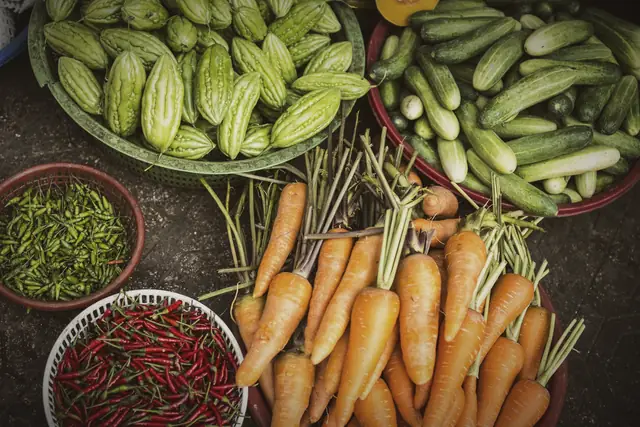
Growers
The menu is their calendar.
We buy from a handful of small farms within an hour of North Park, and we write the menu after we see what they’ve brought, not before. When the figs are gone, the fig plate is gone.
The room
Designed to slow you down.
Lit by the fire
The oven is the brightest thing in the room. Everything else is candles and low, warm lamps.
No screens
No televisions, and music kept at the volume of conversation.
No turn times
Your table is yours for the night. We’ll bring the check when you ask for it.
Seats that face the fire
Twelve bar seats and a four-seat chef’s counter look straight into the oven, and all of them are held for walk-ins.